
Flood protection and drainage costs may change for many urban and rural properties on the Clutha and Taieri flood and drainage schemes
Learn moreFlood protection and drainage costs may change for many urban and rural properties on the Clutha and Taieri flood and drainage schemes
St Clair beach
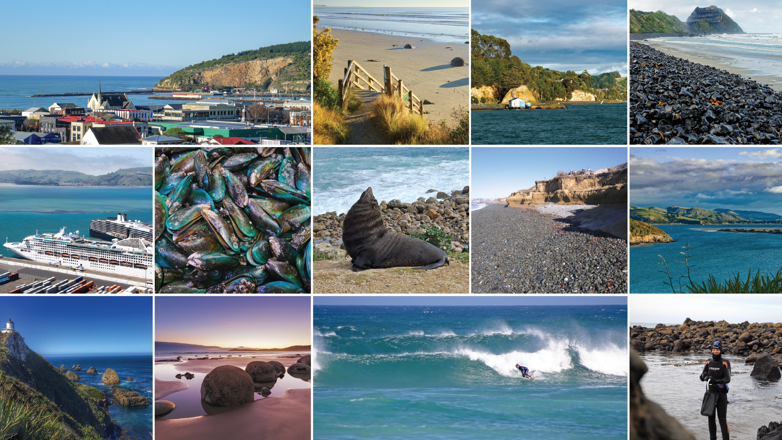
Whether you live in coastal Otago or just love to be beside the seaside, we wanted to hear your views on the issues and opportunities for Otago's coast from a range of topics, from public access to water quality.
Feedback has now closed.
Thank you to everyone who gave their feedback on issues and opportunities for Otago's coast!
From 13 July until 10 August 2026, feedback was open to share your views on a range of environmental, cultural, social, recreational and economic issues and opportunities, including coastal water quality, use of natural resources and risks such as natural hazards.
We would like to thank all those who gave their time to attend the drop in sessions and complete the on-line survey. What we heard adds to our understanding through the valuable perspectives, experiences, and knowledge shared by participants.
The feedback we received will contribute to the evidence base we have to support management of the Otago Coast under the new resource management system, including a future regional spatial plan and natural environment plan.
This work reflects the Council’s priority action to progress work to understand coastal environmental issues, opportunities, and risks, in partnership with mana whenua and our communities, to ensure a strong evidence base is available regardless of future regulatory settings.
The collated feedback will give us a better understanding of those matters relevant to spatial planning and management of the Otago coast.
The feedback will be incorporated into an Issues and Opportunities Report and will inform further consideration on the management of coastal issues in Otago.
This report and a summary of the feedback received will be made available on the ORC website before the end of this year.
The current Regional Plan: Coast was prepared under the Resource Management Act 1991 and remains the operative planning framework for managing activities in the coastal marine area (CMA).
However, this work is taking place during a period of significant national resource management reform. As a result, the process is not expected to simply lead to a like-for-like replacement ‘Coast Plan’.
Instead, the coastal issues, values and management responses identified through this process will help inform how coastal management is carried forward into the new resource management system.
ORC has identified the following topics to represent the range of values, issues and opportunities present in Otago’s coastal areas.
We would like to understand what is important to you and whether we have missed anything.
Land use and urban development provide opportunities to support thriving communities, such as transport routes, harbours, employment, and recreation, while maintaining the environmental, cultural, and landscape values that make the coast distinctive.
Public access to the coast is highly valued and plays an important role in supporting quality of life and community wellbeing.
Occupying space is the ability to use coastal space, and how important it is to Otago communities.
Taking (extraction) and deposition of material in the coastal environment can bring both benefits and environmental pressures.
Infrastructure, including ports, needs to be located within the coastal environment, and this provides benefits to the people, communities and the regional economy of Otago.
Marine aquaculture involves farming fish, shellfish and seaweed. It occurs either inshore, in coastal waters influenced by tides, or offshore in the open ocean.
Coastal biodiversity includes the plants, animals and habitats found in the sea and along the coast, such as saltmarshes, sand dunes and the land next to the shore.
Natural hazards and climate change is the natural dynamic coastal processes that support coastal values are also responsible for processes like erosion and flooding that pose hazards to wellbeing.
Good coastal water quality keeps the estuaries and seas around our coast healthy, makes it safe for people to swim and play, supports jobs and tourism, provides ecosystem services, and protects food sources such as shellfish.
Historic heritage helps people understand and appreciate Aotearoa New Zealand’s history and cultures.
Natural character, features, landscapes and seascapes are the visible elements, such as landforms and scenic views. The Otago coast has a diverse range of high scenic values which contribute to the local economy by attracting visitors and tourism.
Surf breaks are an important component of coastal natural character and a valued recreational resource for New Zealanders and attracting international visitors.
Biosecurity is how Otago’s coastal environment is vulnerable to biosecurity risks from invasive pests and diseases.
Email policy@orc.govt.nz
Phone 0800 474 082


